Ending Publication Bias: Why Negative Results Matter for All of Us


I am delighted to share a publication I recently co-authored: Ending publication bias: A values-based approach to surface null and negative results, just published in PLOS Biology. This paper is the outcome of a two-day workshop in Bethesda, USA, hosted by the NINDs in 2024, which I had the honour to attend alongside colleagues from many disciplines and parts of the world.

The consensus we reached is simple, yet urgent: if science only rewards and publishes “positive” or “impactful” results, then we are not doing good science. We are leaving vital knowledge in the drawer — results that tell us which avenues don’t work, which hypotheses have been tested and ruled out, which drugs or models are not worth pursuing. Not sharing this knowledge slows down research, wastes resources, and, most importantly, hampers our ability to solve critical problems such as finding cures for rare diseases, a cause very close to my heart.

This is not a new concern for me. At Naukas Bilbao 2023, I dedicated this science communication talk to this very issue. In those nine minutes, I spoke about the obsession with “excellence” in research and the low value we assign to “negative” results or to replication studies. I called then — and call again now — for a shift in how we assess science: not by the perceived impact of the outcome, but by the quality of the process. To know where not to go is just as important as knowing the path forward.

I strongly encourage you to also read Stephen Curry’s blog post reflecting on our paper, Let’s Get Negative, which captures the spirit of our work and why this conversation needs to spread widely across the research community.

Science should be open, transparent, and rigorous. Sharing all results — positive, negative, or null — strengthens trust in science and accelerates discovery. I am proud that our publication sets out a values-based roadmap for funders, institutions, publishers, and researchers to make this cultural shift possible.

For me, this is more than a publication. It is a call to action for all of us to rethink how we value and share scientific work. Because if we let bias silence results that don’t fit the expected narrative, we weaken our chances of making the breakthroughs that society urgently needs.
Updating our page (it was about time)

Yes, our last entry for this news section was in 2018… and most of the pics were also VERY updated.

Sorry, we have been very busy, most of it has a reflection on our publications page, but the most important bits (the fun bits) and only for us to remember (we may include a pic or two, eventually).

Hopefully, we will update the page more often and not wait another 7 years until we update it all again…

Visit from IIS La Fe

A new  team member joined us for a 3 month visit. Javier Poyatos García, a postgraduate student from the IIS La Fe (Valencia), will be learning about  our myoblots and our methods to perform CRISPR/Cas 9 gene edition on myoblsts. We are sure that we will learn a lot with him, we are delighted to have him.

Comment published about antisense delivery

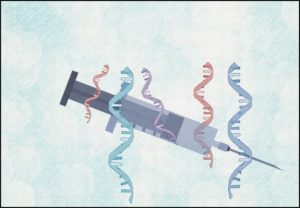
We have recently published in Genética Médica journal an commentary (in Spanish) titled “Cómo mejorar la distribución de los medicamentos antisentido para acelerar su tránsito a la clínica” discussing antisense oligonucleotides mechanism of action; going through the drugs based on this technology that have been already approved by the Food and Drug Administration (FDA) and explaining the main issues that difficult their transition to the clinic. We also review some possible strategies to improve antisense delivery and the role of networks such as COST Actions in solving this hurdle.  


You may find the article here: https://revistageneticamedica.com/2018/10/15/gmg-o007-medicamentos-antisentido/ 

Cost Action CA1703


Cost Action CA1703 started yesterday with a kick off meeting in Brussels.

Management committee members representing the 25 countries that currently take part in this network agreed on the first steps of the action, including assigning the role of Chair to Dr. Virginia Arechavala-Gomeza.

This COST Action will run until October 2022 and aims to overcome delivery problems of antisense RNA therapeutics.

https://www.cost.eu/actions/CA17103#tabs|Name:overview

New collaborative publication on outcome measures.

Our latest publication “A multicenter comparison of quantification methods for antisense oligonucleotide-induced DMD exon 51 skipping in Duchenne muscular dystrophy cell cultures” was recently published.

As it is the case with several of our publications, it summarises a collaboration between different research labs to agree on protocols and cross-validate the methods we use to quantify exon skipping in cell culture, the first step in the screening of new antisense oligonucleotide drugs.

This collaboration was facilitated by COST Action networking grant BM1207 and researchers from our group at Biocruces Bizkaia collaborated with scientists from:

  • Leiden University Medical Center in The Netherlands;
  • University of Ferrara,  Italy;
  • University College London Great Ormond Street Institute of Child Health, United Kingdom;
  • BioMarin Nederland B.V., The Netherlands;
  • Royal Holloway University of London, United Kingdom;
  • University of Northampton, Northampton, United Kingdom
  • Institute of Myology, France

III Workshop organized by Duchenne Parent Project Spain on the Transfer of Scientific Knowledge in Duchenne muscular dystrophy


Duchenne Parent Project Spain is a non-profit association created and directed by parents of children with Duchenne and Becker.

On September 7, 2018, we went to the 3rd III Workshop organized by Duchenne Parent Project Spain on the Transfer of Scientific Knowledge in Duchenne muscular dystrophy of the University of Barcelona celebrated the 5th World Day of Duchenne Awareness Duchenne (DMD). It involved more than 45 Spanish scientists who had the opportunity to discuss the research carried out in Spain in Duchenne Muscular Dystrophy, thus establishing future collaborations to advance in the search for effective treatments for DMD.

“The objective of this workshop is to establish communication and collaboration between the different scientists who are investigating the Duchenne and Becker Muscular Dystrophies in Spain, thus facilitating the tools for a rapid advance in these rare diseases” says Dr. Marisol Montolio, Scientific Director of Duchenne Parent Project Spain.


Dr Sabater-Molina visited us on July 2018

Dr  Sabater Molina visited our lab on July to learn antisense oligonucleotide transfection techniques to be able to apply them in the project awarded to her by The Spanish Society of Cardiology (SEC). This project, in which we participate as collaborators, is titled “antisense oligonucleotides as a new therapeutic strategy in hypertrophic cardiomyopathy” and will be completed at  Hospital de la Arrixaca in Murcia.